
By Alan Sherman
Organizations considering solar energy often cite similar concerns. Questions about timing, cost, or complexity that cause well-intentioned projects to slow down or stall altogether. These hesitations are understandable: installing solar is a significant decision that touches finance, facilities, governance, and community priorities.
However, in most cases, these concerns can be reframed into opportunities. Below are six of the most common reasons organizations hold off on going solar — and how to address each one.
1. “We can’t afford it right now.”
Concern:
Many organizations assume solar is too expensive — that the upfront costs are out of reach or that the projected financial returns don’t align with their budgets or expectations. As a result, they postpone the decision, waiting for a “better time” – either for their budget to improve or for solar economics to shift in their favor.
Response:
There are more financing options available today than ever before, including models that require no upfront investment and no ongoing cost to the organization. While purchasing a system outright typically yields the highest long-term returns, not every organization needs to take that path in order to benefit from solar.
Solar financiers are eager to provide funding solutions for nonprofits, schools, and houses of worship, enabling them to access clean energy and realize savings immediately — without any capital expenditures. A conversation with a trusted solar partner can reveal pathways that make solar not only possible, but practical for your organization.
This moment, December 2025 through June 2026, is an optimal time to take advantage of solar incentives. The Massachusetts solar program, SMART, recently rolled out a new set of state incentives, and organizations can still lock in the federal tax credits that will deliver 30-50% cost savings via a tax credit or nonprofit Elective Pay.
2. “We have other priorities and we don’t have consensus yet anyway.”
Concern:
Organizations face multiple competing priorities which can cause even the best opportunities to stall. In particular, consensus-driven organizations thrive on collaboration among key stakeholders — but sometimes, good intentions lead to “analysis paralysis.” Committees explore every angle, but without a clear decision-maker, projects lose momentum and stall.
Response:
Solar success often depends on an internal champion — someone empowered to guide the process and help the group move from discussion to decision. Healthy deliberation is essential, but progress comes when one person, perhaps with the support of a small team of solar proponents, can confidently recommend next steps and move the organization forward.
The best solar solution providers are ready and able to support these champions with data, presentations, and customized projections to help reduce the workload, build consensus, and demonstrate the project’s value across stakeholders.
3. “We have already missed the Investment Tax Credit.”
Concern:
Some organizations fear they’ve already missed key federal tax incentives — or that they’ll expire before the organization can finalize its plans.
Response:
There’s still time to capture major benefits. Organizations can “safe harbor” their eligibility by committing as little as 5% of project costs before July 2026. They then have a full four years to “energize” (complete) the project in order to qualify for the ITC. Alternatively, organizations that are not ready to commit 5% of the project cost by next July can still obtain the federal incentives, provided the project is energized by the end of 2027.
Yes, the clock is ticking, but it is certainly not too late to benefit from this program. Working with an experienced solar partner ensures you meet key contract milestones, adhere to important tax credit parameters, and don’t leave incentives on the table. In forward-thinking states like Massachusetts, additional programs — such as the SMART 3.0 incentives — provide even more value to the federal incentives, reinforcing the opportunity for nimble, well-informed organizations to move forward with renewable energy adoption.
4. “There’s too much uncertainty right now.”
Concern:
In today’s challenging political and economic environment, some organizations feel paralyzed by uncertainty — unsure whether now is the right time to make a long-term commitment.
Response:
Solar is one of the few investments that offers certainty in uncertain times. By locking in energy savings and stabilizing electricity costs for decades, the organization gains financial predictability and demonstrates climate leadership.
Choosing solar is also a tangible, hopeful act. It’s a way to model resilience and responsibility for your community — rather than being paralyzed by outside factors. When times feel unpredictable, moving forward with solar can be an empowering choice.
5. “We’re not ready to commit.”
Concern:
Some organizations worry that signing a letter of intent or contract locks them into a decision before they’ve fully assessed changing incentives or policies.
Response:
Exploration doesn’t mean commitment. A well-structured development process allows for flexibility and informed decision-making along the way. In most cases, organizations can proceed through evaluation and design stages with no obligation to move forward until final terms are approved. As noted above, making a firm decision by July 2026 enables organizations to take advantage of the Investment Tax Credit.
Missing this deadline does not eliminate an organization’s ability to adopt solar, but it does reduce the savings that the ITC would otherwise provide. Once again, a strong solar partner can provide critical information in a multitude of ways – on system design, financing options, savings potential, critical deadlines, and more – provided the organization is able to meet the ITC timeline.
Organizations will need to make a firm decision in the future, and there is still time, but it is important that you get started as soon as possible. It is expected that as the July 2026 safe harbor deadline approaches, there will be a significant increase in organizations moving forward to lock in their ITC benefits. A balanced sense of urgency is prudent at this time, and you might even plan to get ahead of the July 2026 deadline by working towards satisfying the safe harbor requirements for your organization by, say, April 1.
The key is to begin the process — so that when you are ready to decide, you’ve already done the work to act quickly and capture available incentives.
6. “Our electricity costs are manageable.”
Concern:
Some organizations feel no immediate financial pressure to make a change — they’re comfortable with their current electricity costs and don’t feel the need to address them.
Response:
Energy prices are rising steadily. The U.S. Energy Information Administration (EIA) projects electricity costs will increase by 18% by the end of 2026, driven by growing demand from electrification and data infrastructure. Even if you don’t feel the pinch of high energy costs today, you likely will in the near future. By investing in solar now, organizations can insulate themselves from those cost increases and even generate excess power that provides long-term financial benefit.
Going solar isn’t just about managing today’s costs — it’s about future-proofing your organization’s operations and demonstrating environmental stewardship to your community.
The Bottom Line
The path to solar may seem complex, but with the right partners, it becomes achievable — perhaps even simple. Mission-driven organizations can learn from others who have successfully overcome financial, logistical, and operational barriers, as well as from leading solar partners who have the knowledge and resources to help them bring solar projects to life.
As the saying goes, the best time to start was yesterday. The next best time is today.
If you have any questions about the challenges your organization faces in moving forward with your solar project, please contact Rachel Gentile at rachel@resonant.energy, Grace Evans at grace@sunwealth.com, or message me on LinkedIn.
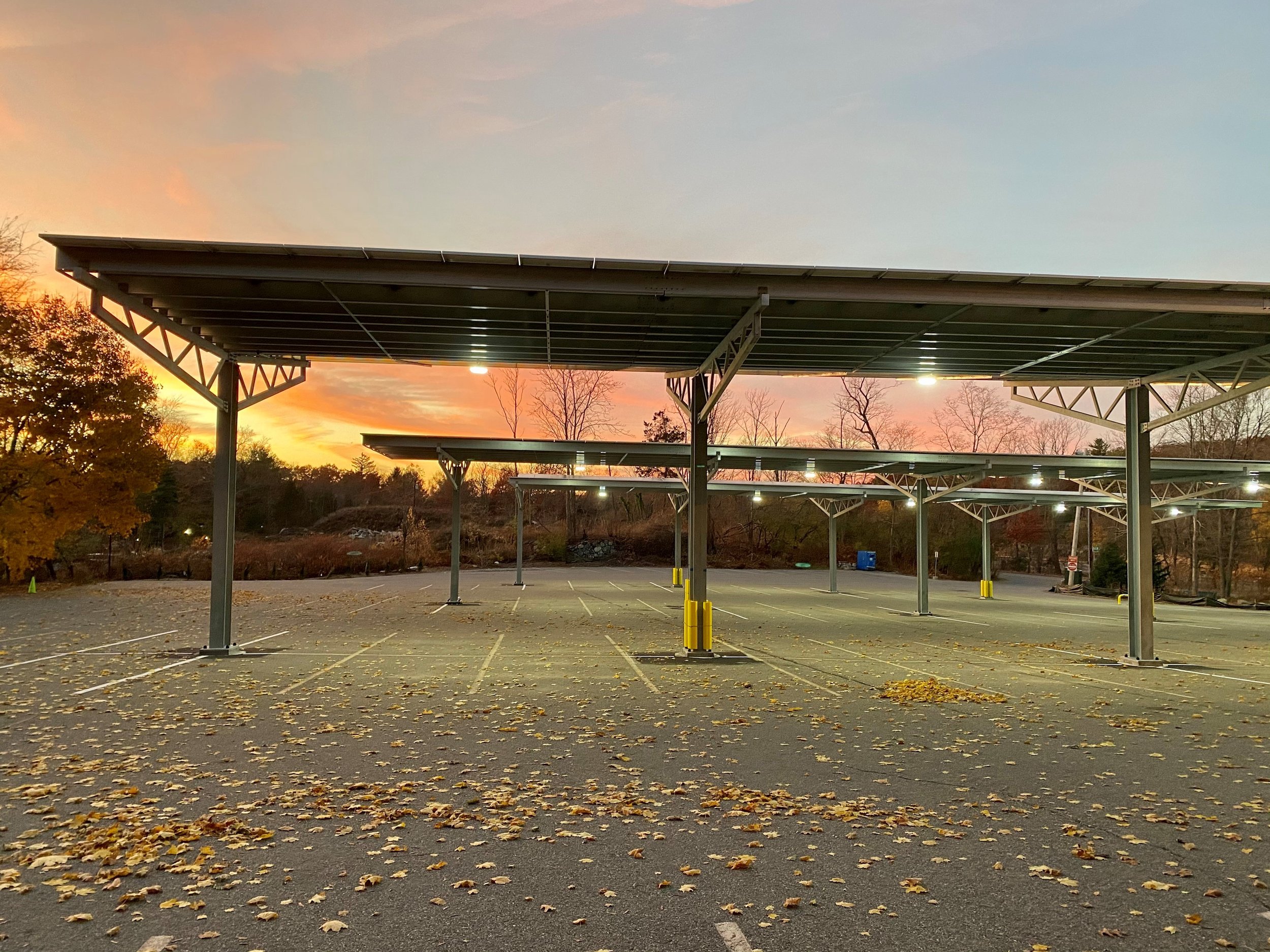
Temple Emunah in Lexington, MA, at sunset
About the Author

Alan Sherman co-led a solar energy initiative at Temple Emunah in Lexington, MA in 2019-2020. This effort resulted in the installation of a 336-kW solar canopy system which generates 162% of the organization’s electricity usage, and the excess is sold to low-income families in the Boston area at a discount, as part of a Community Solar initiative. The system was recently recognized as the largest solar installation of any synagogue in Massachusetts, and one of the Top 5 among all houses of worship in the State. Professionally, Alan is a marketing consultant with more than 25 years of experience in the technology sector.